I have been doing my homework. Something I neglected when I was in school. I’ve been perusing the Australian Climate Change Authority Annual Progress Report for 2024. Fascinating stuff for a stats buff, can’t get enough of it!
Australia’s emissions in 2023 were about 450 million tons.
In 2024 our emissions dropped 0.7%. That is the good news.
Buried in the report is a note that for the last 4 years the Authority has been recalibrating how much CO2 has been released or absorbed by the land and the forests. This means the figures have been adjusted downwards by 4.3% due to recognising the hard work done by our trees. Thank you trees!
This means that the CO2 we pumped into the sky actually increased this year by 5%. That is the bad news!
The Climate Change Authority found that our land and forests have been absorbing 4.3% more than we previously thought. This is a one off anomaly. We won’t be able to pull that stunt again.
So how are we travelling overall?
Well 18 years ago, way back in 2006, when we signed the Paris Climate Agreement, brimming with hope and enthusiasm and pledging hand on heart, to reduce our emissions to Zero by 2050 (more or less) our total emissions were 12% more than they are today, 18 years later. We have 26 years left to reduce our emissions to zero by 2050. If we continue on our present trajectory we will reduce our emissions by a further 24% at best. 24 + 12 = 36% less than 2006. Still another 64% to go. Not good enough. Not even close. Dismal failure is staring us in the face.
Of course our ever diligent government is confident that our efforts at reducing emissions are not following a straight trajectory, they like to think our production of renewable energy is increasing exponentially.
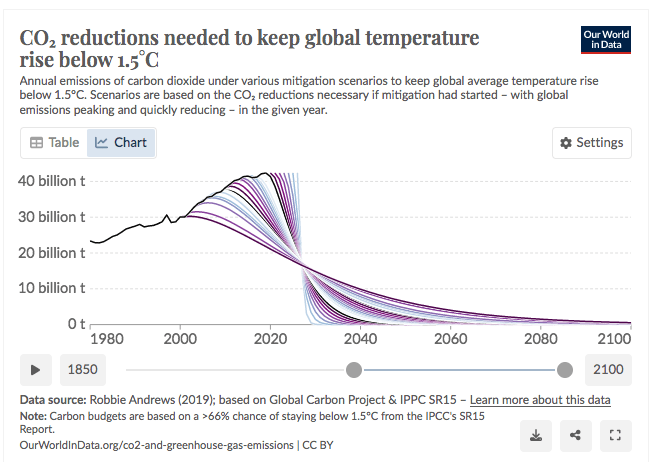
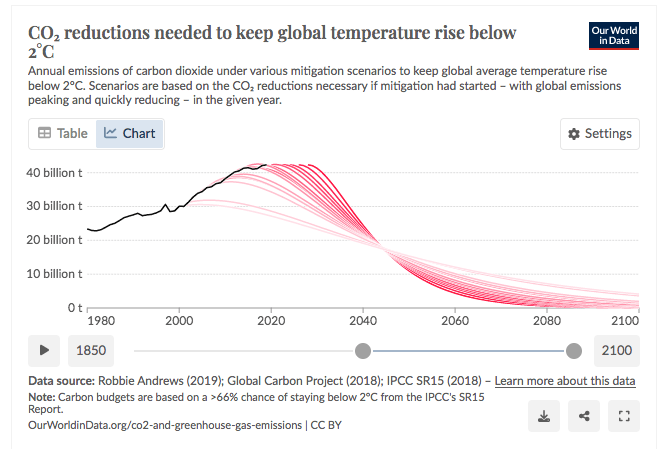
Alas, the stats say otherwise. As the graph below will show, every year our pathway to net zero becomes ever more precipitous. It is now dizzyingly vertiginous! We are fast approaching the point where achieving net zero by 2050 will require the complete cessation of all fossil fuel burning what-so-ever!
Despite our best efforts, we are falling behind. Why is that?
The problem is glaringly obvious – discretionary spending!
According to the ABS, my favourite bureau, last year Australians spent fully 40% of their household budgets on discretionary items, things we don’t need, and that in the middle of a cost-of-living crisis. If we used our discretion even briefly, we could reduce our emissions by a staggering 40%. The climate crisis would be over and done with in one fell swoop. But that is not going to happen, is it?
We have come to expect our material wealth to increase steadily throughout our life times, culminating in an obscene amount of disposable income in our dotage. We collectively refuse to give up one single skerrick of that wealth in the name of solving the climate crisis or global inequality or anything else for that matter. We have made it absolutely clear that our personal comfort and pleasure is far more important than anything else in the known universe, and any government foolish enough to challenge that attitude will be turfed out of office!
So what on earth can we do about our predicament?
Again the answer is obvious, but unpalatable. If people refuse to reduce their discretionary spending for the sake of the climate, we must reduce discretionary spending by boycotting the economy. Way back in World War 2 the economy was barely functioning. All resources and human power were put into the war effort. Food was rationed, luxury items were not available. It was an international crisis, drastic measures were called for, and drastic measures were taken. It worked! We won the war. Well done team! Back then people were prepared to make sacrifices because the bombs were falling all around them. Nothing like imminent death to wake you from your your slumber. Whereas here in the present day, death is not imminent enough. All the death and destruction is taking place on the TV, in far off lands, to people we don’t care about. By the time death arrives on our doorstep it will of course, be far too late. We see smoke on the horizon and hope it will pass us by. It is only when we feel the heat on our cheeks that we leap into action and make a futile attempt at dousing the raging inferno with a wet rag.

 Ben's Blog
One Comment on “Warning – Net Zero by 2050 is unachievable!”